Picture this: Your office Wi-Fi crashes during the biggest client presentation of the year. Your security cameras go offline right when you need them most. And your IT team spends hours crawling around trying to figure out which tangled cable is causing the latest network nightmare.
Sound familiar? You're not alone.
Most businesses are running on outdated, chaotic cabling systems that were never designed for today's connected world. But there's a better way, and it's called structured cabling.
What Exactly Is Structured Cabling?
Think of structured cabling as the organized, professional cousin of that messy box of cables under your desk.
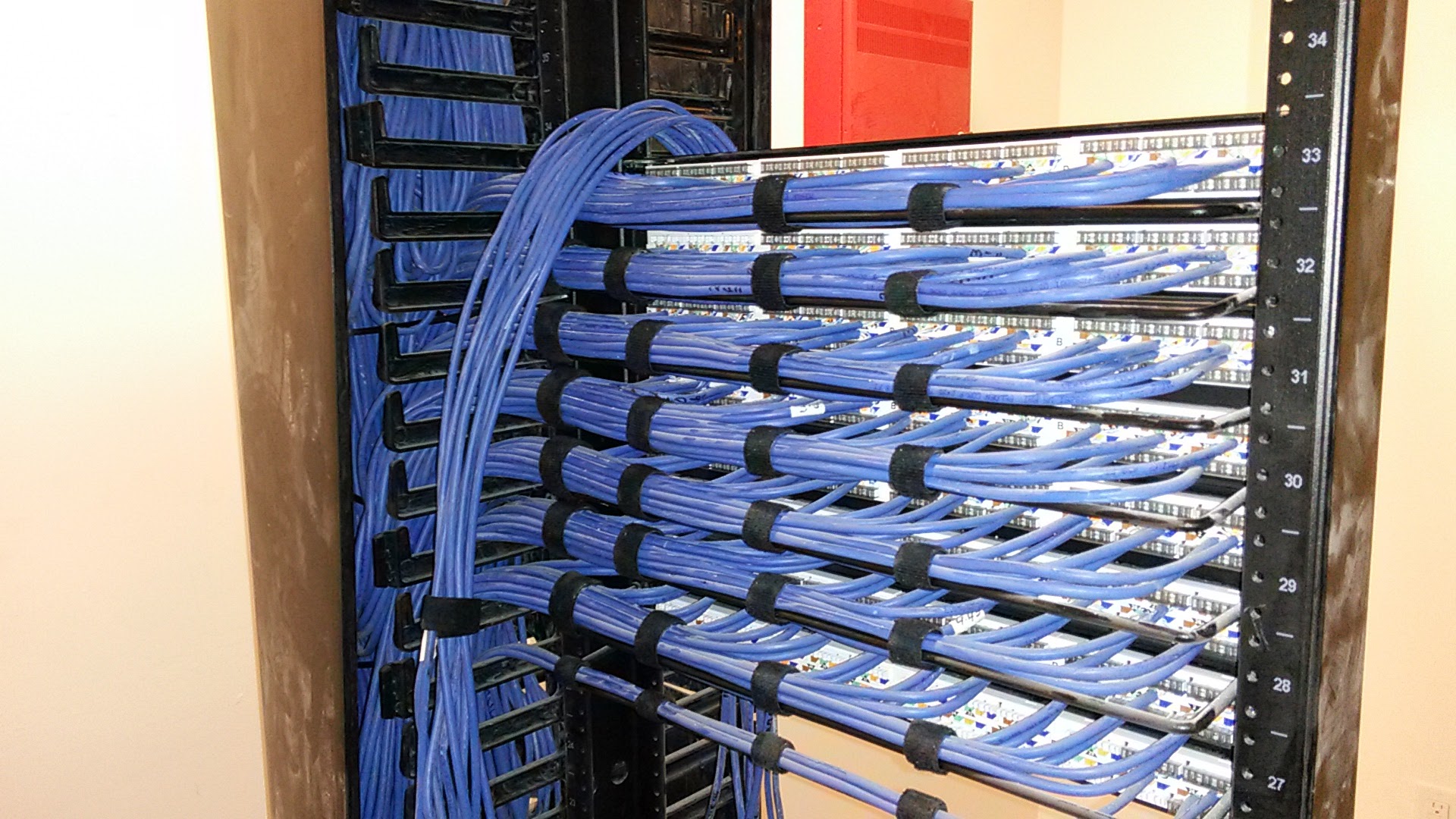
Structured cabling is a standardized approach to building network infrastructure that creates a single, secure, and flexible connectivity system throughout your entire building or organization¹. Instead of the typical spaghetti mess of point-to-point cables, structured cabling follows strict industry standards to create a hierarchical, organized network.
Here's what makes it different:
- Everything follows standards – TIA/EIA-568 and ISO/IEC 11801 guidelines ensure consistency
- One system handles everything – Data, voice, video, and security all run through the same infrastructure
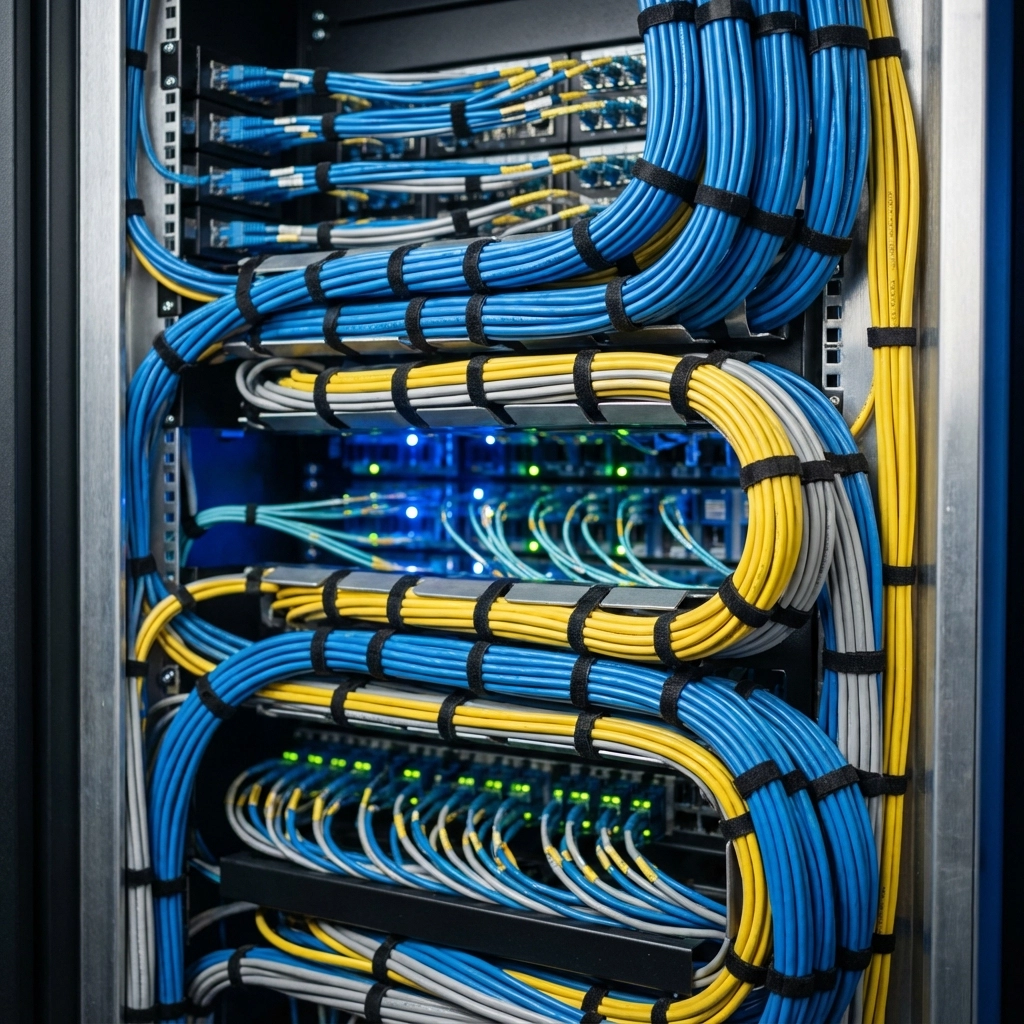
- Organized and labeled – Every cable has a purpose and a place
- Built for the future – Designed to accommodate new technologies without major overhauls
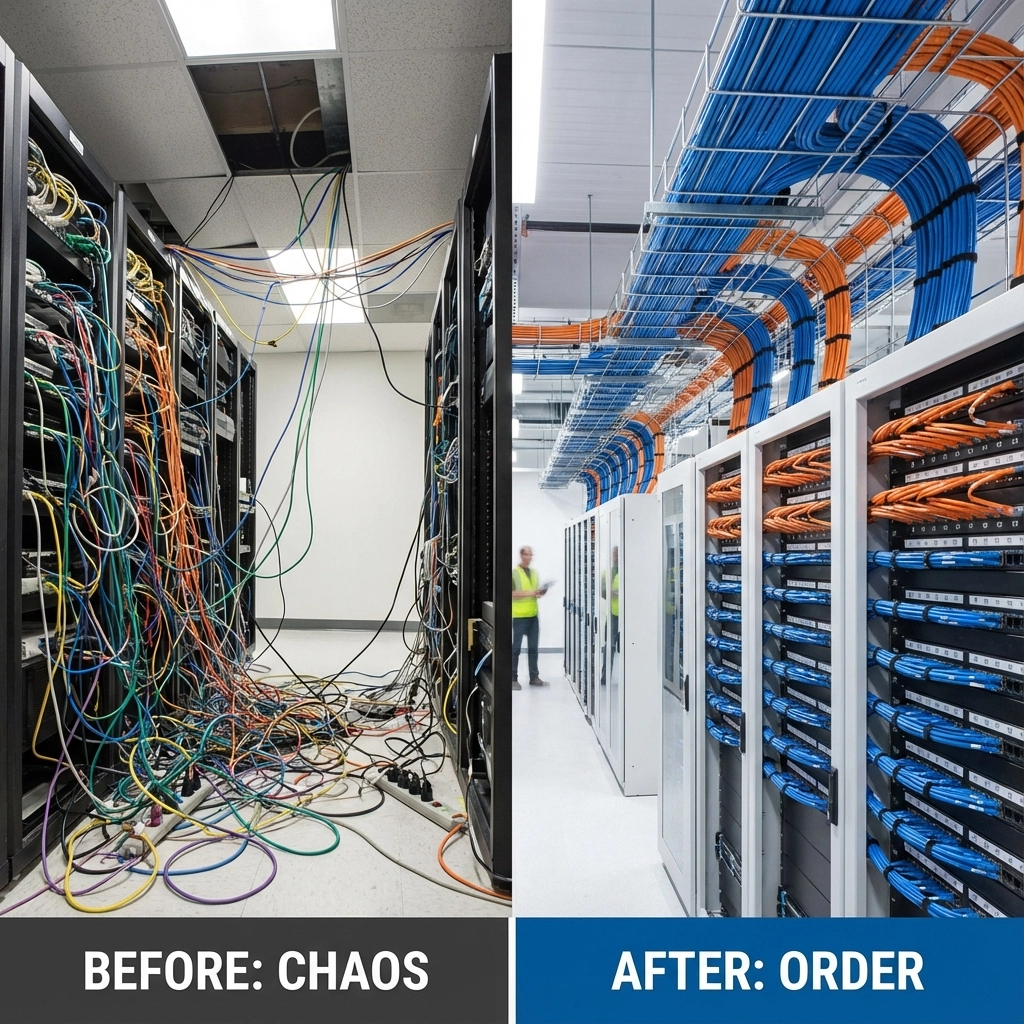
The key difference? Traditional cabling connects devices directly to each other in a web of individual connections. Structured cabling creates a backbone that everything connects to, like having organized highway system instead of random dirt roads crisscrossing everywhere.
Why Your Business Should Care (And Care Now)
Network Performance That Actually Works
Let's be honest, slow internet kills productivity. Structured cabling systems support high-speed data transmission and deliver faster, more reliable connectivity².
These systems prevent the signal interference, crosstalk, and electromagnetic problems that plague traditional setups³. Translation? Your applications run faster, your video calls don't freeze, and your team can actually get work done.
The numbers don't lie: businesses with properly structured cabling report 40% fewer network-related issues and 60% faster problem resolution times.
Your Wallet Will Thank You Later
Yes, structured cabling requires an upfront investment. But here's the thing: it pays for itself quickly through reduced maintenance costs and eliminated emergency repairs².
Consider this: The average business spends $50,000 annually on network downtime and troubleshooting. Structured cabling cuts that number dramatically by making problems easier to identify and fix.
Plus, you'll save on:
- Reduced power consumption from efficient cable management
- Lower maintenance costs due to organized systems
- Minimal emergency repair bills
- Less IT staff time spent on cable-related issues
Scalability That Grows With You
Your business isn't staying the same size forever. Structured cabling systems are inherently scalable: you can easily add new devices, technologies, and bandwidth without major rewiring or operational disruptions².
Modern fiber optic cables and Cat6a installations ensure compatibility with emerging technologies, protecting your infrastructure investment for years to come³. When that new security system or upgraded phone system arrives, installation takes hours instead of weeks.
Security That Actually Protects Your Data
Structured cabling improves network security by isolating different devices and networks from each other, helping prevent unauthorized access and data breaches¹.
The organized nature also makes security monitoring easier. Network administrators can quickly identify unusual activity, trace connections, and isolate potential threats without spending hours following unmarked cables through ceiling tiles³.
Flexibility for Whatever Comes Next
Here's where structured cabling really shines: versatility.
Whether you need to support:
- Video conferencing systems
- High-volume phone conversations
- Security camera networks
- VoIP software
- IoT devices
- Future technologies we haven't invented yet
Your infrastructure can handle it all without downtime⁴. Moving or upgrading equipment becomes manageable instead of a nightmare that requires rewiring half your building.
Real-World Impact: What This Means for Your Day-to-Day Operations
Reduced Downtime Means More Revenue
Network outages cost the average business $5,600 per minute. Structured cabling systems experience 75% fewer outages than traditional setups because problems are easier to identify and resolve³.
When issues do arise, your IT team can trace problems quickly instead of playing detective with unmarked cables. This means:
- Faster problem resolution
- Less business disruption
- Fewer frustrated employees
- More productive workdays
Simplified Management Saves Time and Sanity
Cable clutter creates safety hazards, makes moves and changes difficult, and causes frequent network headaches³. Structured cabling eliminates these problems through standardized organization and clear labeling.
Your facilities team will love how easy it becomes to:
- Add new workstations
- Relocate departments
- Upgrade equipment
- Maintain the system
- Plan future expansions
Future-Proofing Protects Your Investment
Technology changes fast. The structured cabling system you install today needs to support technologies that don't even exist yet.
Modern structured cabling installations use Category 6A copper and fiber optic cables that can handle speeds up to 10 Gbps and beyond⁴. This means your infrastructure investment stays relevant as your business grows and technology evolves.
The Bottom Line: Why This Matters Now
Every day you wait to upgrade your cabling infrastructure is another day of:
- Slower productivity due to network issues
- Higher maintenance costs from band-aid fixes
- Limited ability to adopt new technologies
- Increased security vulnerabilities
- Frustrated employees dealing with connectivity problems
But here's the good news: upgrading doesn't have to disrupt your business operations. Professional structured cabling installation can often be completed during off-hours or in phases that minimize downtime.
The question isn't whether you need structured cabling: it's how much longer you can afford to wait.
If your business relies on technology (and whose doesn't?), structured cabling isn't a luxury: it's essential infrastructure that enables everything else to work properly. From supporting your security systems to ensuring reliable internet connectivity, the right cabling foundation makes all the difference.
Ready to explore how structured cabling could transform your business operations? CableTel Pro specializes in designing and installing structured cabling systems that grow with your business. Our team can assess your current setup and recommend solutions that eliminate network headaches while preparing you for whatever technology comes next.
Sources:
- "Structured Cabling System Standards and Design," Telecommunications Industry Association
- "The Business Case for Structured Cabling," Network Computing Magazine
- "ISO/IEC 11801 Information Technology Generic Cabling Standards," International Organization for Standardization
- "Category 6A and Fiber Optic Infrastructure Performance Studies," BICSI Industry Reports