Choosing the right structured cabling for your data center doesn't have to break the bank or overwhelm your IT team. With dozens of cable types, architectures, and vendors competing for your attention, the decision can feel impossible.
Here's the thing: most data centers only need a handful of proven solutions. The key is matching your specific requirements: whether that's high-density connections, blazing speeds, or budget constraints: with the right products.
Let's break down the most important cabling decisions you'll face and which products actually deliver results in real-world data center environments.
What's the Real Difference Between Copper and Fiber?
The copper versus fiber debate isn't just about speed anymore. It's about finding the sweet spot between performance, cost, and future-proofing your investment.
Copper Cabling Advantages:
- Lower upfront costs – Significantly cheaper per port than fiber
- Simpler installation – Most technicians are already trained on copper termination
- Wide compatibility – Works with existing network equipment without adapters
- Power over Ethernet (PoE) support – Can deliver power and data simultaneously
- Easier troubleshooting – Standard testing equipment is readily available
Copper Cabling Limitations:
- Distance restrictions – Maximum 100 meters for most applications
- Electromagnetic interference – Can degrade performance in electrically noisy environments
- Lower speeds at longer distances – Performance drops significantly beyond 55 meters for 10Gbps
- Higher power consumption – Generates more heat than fiber alternatives
Fiber Optic Advantages:
- Unlimited bandwidth potential – Supports current and future speed requirements
- Long-distance capability – Can span hundreds of meters without signal degradation
- Immune to electromagnetic interference – Perfect for industrial environments
- Lower latency – Critical for high-frequency trading and real-time applications
- Future-proof investment – Won't become obsolete as bandwidth demands increase
Fiber Optic Limitations:
- Higher initial costs – Equipment and installation typically cost 2-3x more
- Specialized installation requirements – Requires trained fiber technicians
- Fragile during installation – Can be damaged more easily than copper
- No power delivery – Requires separate power connections for endpoint devices

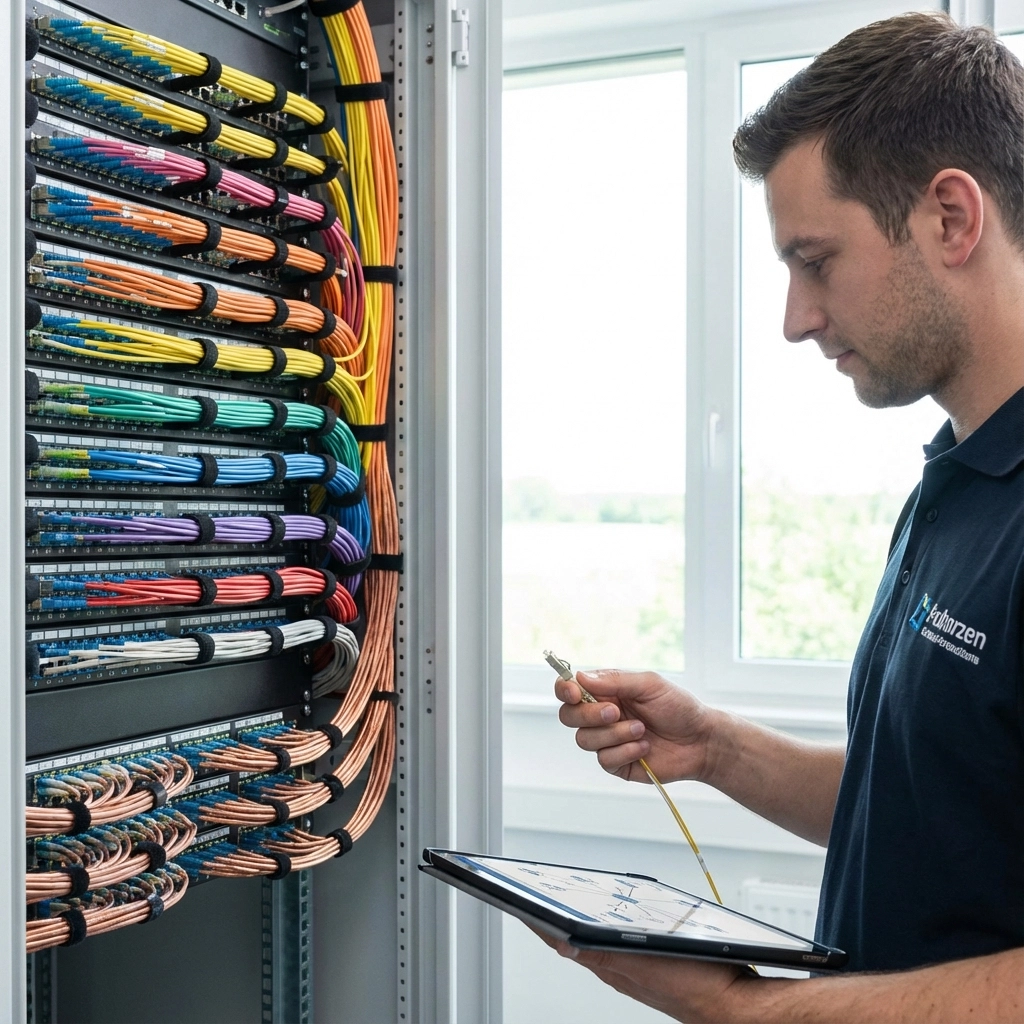
Alt: Professional technician installing and organizing structured cabling in a data center server rack
Which Copper Cable Category Should You Choose?
Not all copper cables are created equal. Here's how the most common categories stack up for data center applications:
Category 6 (Cat6)
Best for: Budget-conscious deployments with moderate speed requirements
Key specs:
- Maximum speed: 1 Gbps (up to 100 meters), 10 Gbps (up to 55 meters)
- Bandwidth: 250 MHz
- Typical cost: $0.20-0.40 per foot
Pros: Widely available, cost-effective, supports most current applications
Cons: Limited 10 Gbps distance, may struggle with future bandwidth demands
Category 6A (Cat6A)
Best for: High-performance environments planning for 10 Gbps networks
Key specs:
- Maximum speed: 10 Gbps (up to 100 meters)
- Bandwidth: 500 MHz
- Typical cost: $0.35-0.60 per foot
Pros: Full 10 Gbps performance, better shielding, future-ready for most applications
Cons: Higher cost, thicker cables require more pathway space
Category 7 (Cat7)
Best for: Specialized applications requiring maximum copper performance
Key specs:
- Maximum speed: 10 Gbps (up to 100 meters), theoretical 40 Gbps support
- Bandwidth: 600 MHz
- Typical cost: $0.50-0.80 per foot
Pros: Highest copper performance, excellent shielding, longest lifespan
Cons: Most expensive copper option, requires specialized connectors
Understanding Fiber Optic Types for Data Centers
Fiber selection depends heavily on your distance requirements and speed targets. Here's what you need to know about the most common types:
OM3 Multimode Fiber
Best for: Medium-distance connections with moderate speed requirements
- 10 Gbps distance: Up to 300 meters
- 40 Gbps distance: Up to 100 meters
- Typical cost: $1.50-2.50 per meter
- Use case: Backbone connections between floors or buildings
OM4 Multimode Fiber
Best for: High-speed applications requiring longer distances
- 10 Gbps distance: Up to 400 meters
- 40 Gbps distance: Up to 150 meters
- 100 Gbps distance: Up to 100 meters
- Typical cost: $2.00-3.00 per meter
- Use case: Primary choice for most data center backbone applications
OM5 Multimode Fiber
Best for: Future-proofing with short-wave division multiplexing (SWDM) support
- Similar distances to OM4 but with wavelength division capabilities
- Typical cost: $2.50-3.50 per meter
- Use case: Specialized applications requiring multiple wavelengths on one fiber
Single-Mode Fiber (OS2)
Best for: Long-distance connections and maximum future-proofing
- Distance: Virtually unlimited (kilometers)
- Speed: Supports all current and foreseeable future speeds
- Typical cost: $1.00-2.00 per meter (cable is cheaper, equipment is more expensive)
- Use case: Campus connections, metro links, maximum performance requirements

Which Cabling Architecture Fits Your Data Center?
Your cabling architecture choice impacts everything from initial costs to future scalability. Here are the four main approaches:
1. Centralized Cabling
Best for: Small data centers with limited space and simple requirements
How it works: All connections run to a single, central location
Pros: Easy to manage, single point of administration, lower equipment costs
Cons: Limited scalability, longer cable runs, potential bottlenecks
2. End-of-Row (EoR)
Best for: Medium-sized deployments with moderate growth plans
How it works: Network equipment placed at the end of each server row
Pros: Shorter cable runs than centralized, easier troubleshooting, moderate costs
Cons: Multiple management points, limited rack space efficiency
3. Middle-of-Row (MoR)
Best for: Deployments wanting to minimize cable length variations
How it works: Patch panels positioned in the middle of rows to reduce maximum cable lengths
Pros: More consistent cable lengths, improved airflow compared to EoR
Cons: More complex planning, potential aisle access issues
4. Top-of-Rack (ToR)
Best for: High-density environments requiring maximum flexibility
How it works: Network equipment mounted in or above each rack
Pros: Shortest cable runs, maximum scalability, efficient rack utilization
Cons: Highest equipment costs, more complex management, requires more skilled staff
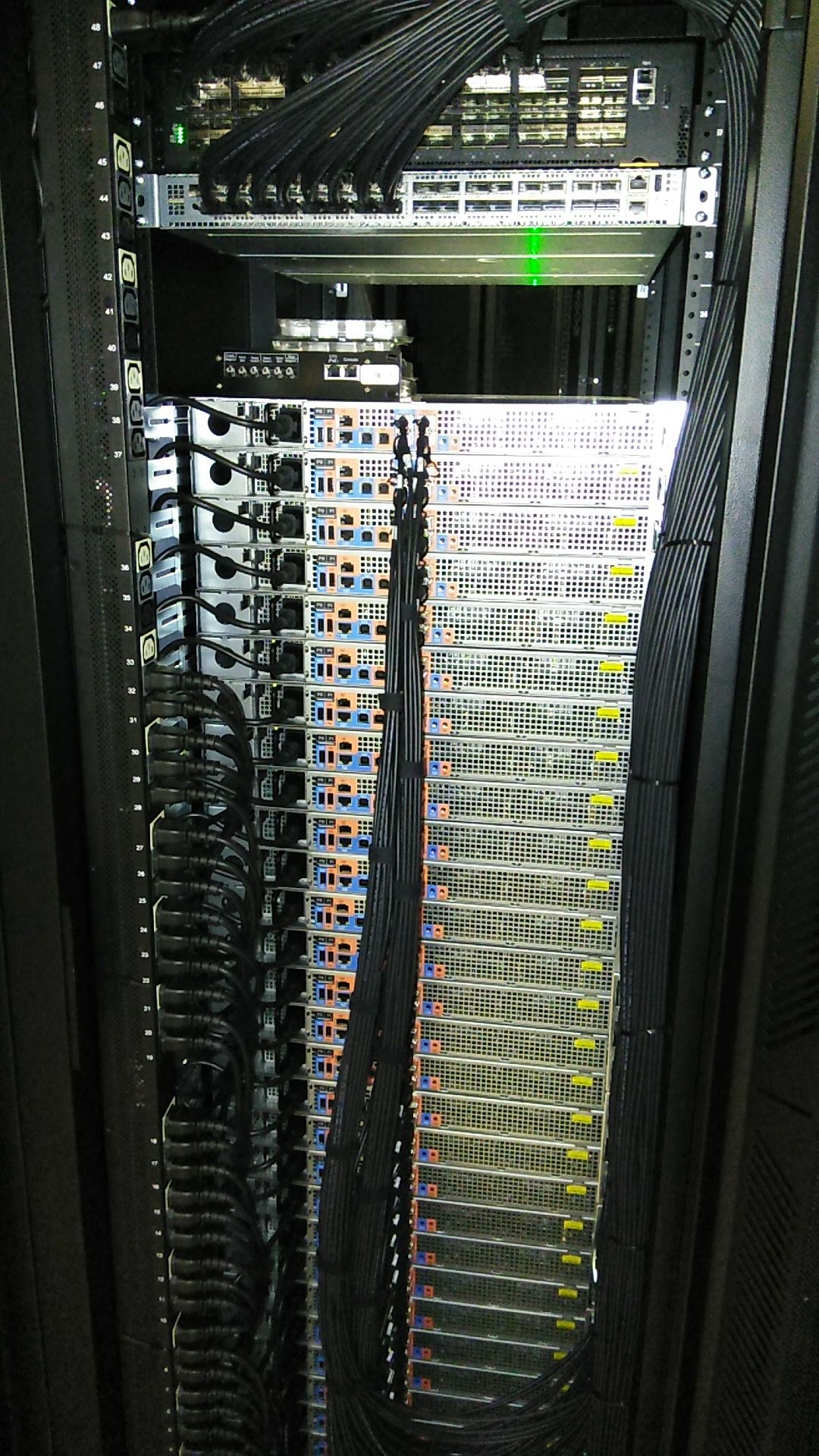
Alt: Organized high-density server rack showing professional structured cabling installation
Matching Products to Common Data Center Scenarios
High-Density Scenario
Challenge: Maximum port count in minimum space
Best solution: ToR architecture with Cat6A or OM4 fiber
Key products: High-density patch panels, angled patch cords, cable management systems
Why it works: Minimizes cable congestion while maintaining performance
High-Speed Scenario
Challenge: Supporting 40/100 Gbps and beyond
Best solution: OM4 multimode or OS2 single-mode fiber with MTP/MPO connectivity
Key products: MTP trunk cables, breakout cassettes, high-speed transceivers
Why it works: Fiber provides the bandwidth headroom for current and future speeds
Budget-Conscious Scenario
Challenge: Minimizing upfront costs while maintaining reliability
Best solution: EoR architecture with Cat6 copper for access, OM3 fiber for backbone
Key products: Standard patch panels, Cat6 patch cords, LC duplex fiber jumpers
Why it works: Balances cost with acceptable performance for most applications
Future-Proof Scenario
Challenge: Building infrastructure that won't need replacement in 5-10 years
Best solution: Hybrid approach with Cat6A copper and OM4 fiber, designed for easy upgrades
Key products: Modular patch panels, high-count fiber trunks, upgrade-ready pathways
Why it works: Provides upgrade paths without complete infrastructure replacement
Notable Vendor Considerations
While specific brand recommendations depend on your requirements and budget, here are key factors to evaluate:
Tier 1 Vendors (CommScope, Panduit, Leviton):
- Comprehensive warranties and support
- Extensive testing and certification
- Higher costs but proven reliability
- Best for mission-critical environments
Tier 2 Vendors (Belden, Siemon, Nexans):
- Good performance at moderate prices
- Strong technical support
- Solid choice for most data centers
- Balance of cost and reliability
Budget Options:
- Lower initial costs but potential long-term risks
- Limited warranty and support options
- Consider for non-critical applications only
- Verify certification and testing thoroughly
Making Your Decision: Key Questions to Ask
Before selecting your structured cabling products, answer these critical questions:
- What's your current bandwidth requirement and growth projection?
- How important is minimizing downtime for your applications?
- What's your budget for initial installation versus long-term maintenance?
- Do you have in-house expertise for installation and troubleshooting?
- Are there any environmental factors (EMI, temperature, space constraints)?
- What's your timeline for implementation and potential future upgrades?
Professional Installation Makes All the Difference
Even the best cabling products won't perform properly without expert installation. Poor terminations, inadequate testing, and improper cable management can turn premium products into unreliable headaches.
That's where professional installation pays for itself. Proper certification testing alone can save thousands in troubleshooting costs down the road.
At CableTel Pro, we help data center operators choose the right structured cabling products for their specific requirements. Whether you're planning a new build, upgrading existing infrastructure, or troubleshooting performance issues, our team brings the expertise to get it done right the first time.
Ready to discuss your data center cabling requirements? Contact us for a consultation tailored to your specific needs and budget.