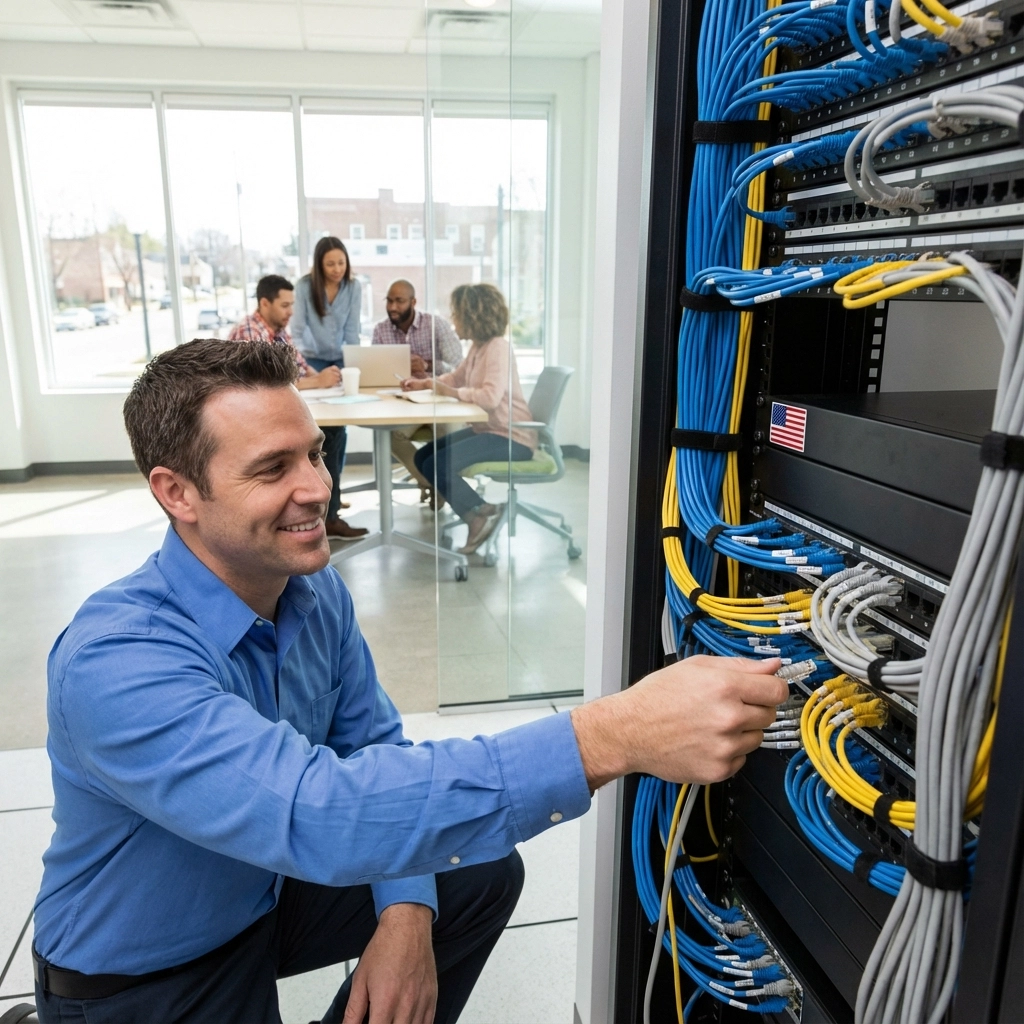
Running a small business doesn't have to mean dealing with messy wires, random internet outages, and "temporary" fixes that somehow become permanent. Here's the thing: your technology infrastructure is the backbone of everything you do, and structured cabling is what keeps it all running smoothly.
Whether you're opening your first location, expanding to multiple sites, or just tired of calling the IT guy every time someone can't print, the right cabling foundation changes everything. Let's break down exactly what small businesses need to know about structured cabling solutions that actually work.
What Is Structured Cabling (And Why Your Business Can't Ignore It)
Structured cabling isn't just about running wires from point A to point B. It's a complete, organized system that supports everything from your internet and phones to security cameras, access points, and POS systems.
Think of it this way: instead of adding random cables every time you need something new, everything is planned, labeled, tested, and ready to grow with you.
Here's what this means for your daily operations:
- Faster, more reliable networks that don't slow down during busy hours
- Fewer mysterious outages that kill productivity for hours
- Easy upgrades when you add new equipment or locations
- Professional appearance that impresses clients and passes inspections
- Long-term cost savings from fewer emergency service calls
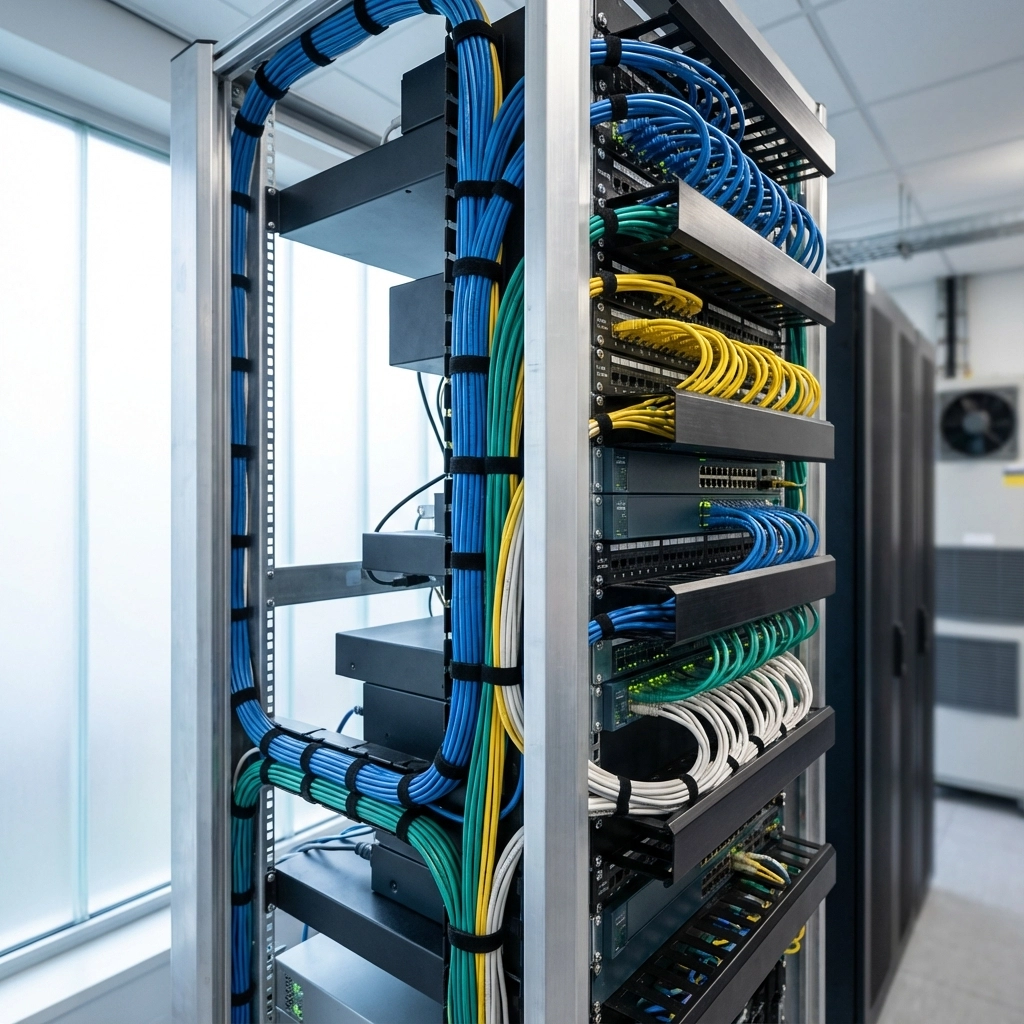 Alt tag: Professional network rack showing organized structured cabling installation with clearly labeled cables and proper cable management in a small business environment
The Small Business Cabling Standards That Actually Matter
Not all cabling is created equal, and choosing the wrong type can cost you thousands down the road. Here are the options that make sense for most small businesses:
Cat6 Cabling: The Sweet Spot for Most Businesses
Cat6 is the gold standard for small to medium businesses today, and for good reason.
Why it works so well:
- Supports gigabit speeds and handles most business applications without breaking a sweat
- Affordable and widely available from any reputable installer
- Future-ready for the next 5-10 years of normal business growth
- Handles multiple devices including VoIP phones, computers, printers, cameras, and POS systems
For offices, retail stores, medical clinics, restaurants, and warehouses, Cat6 offers the best balance of performance and cost. It's reliable, proven, and won't leave you scrambling when you need to add new equipment.
Cat6A for High-Performance Environments
If your business deals with heavy data loads or you're planning significant expansion, Cat6A is worth the extra investment.
Best for:
- Medical offices with imaging equipment and electronic health records
- Media production companies handling large video files
- Businesses with extensive camera systems (20+ cameras)
- Multi-location operations planning long-term expansion
Cat6A supports 10-gigabit speeds over longer distances and offers better protection against interference. Yes, it costs more upfront, but it eliminates the need for expensive rewiring later.
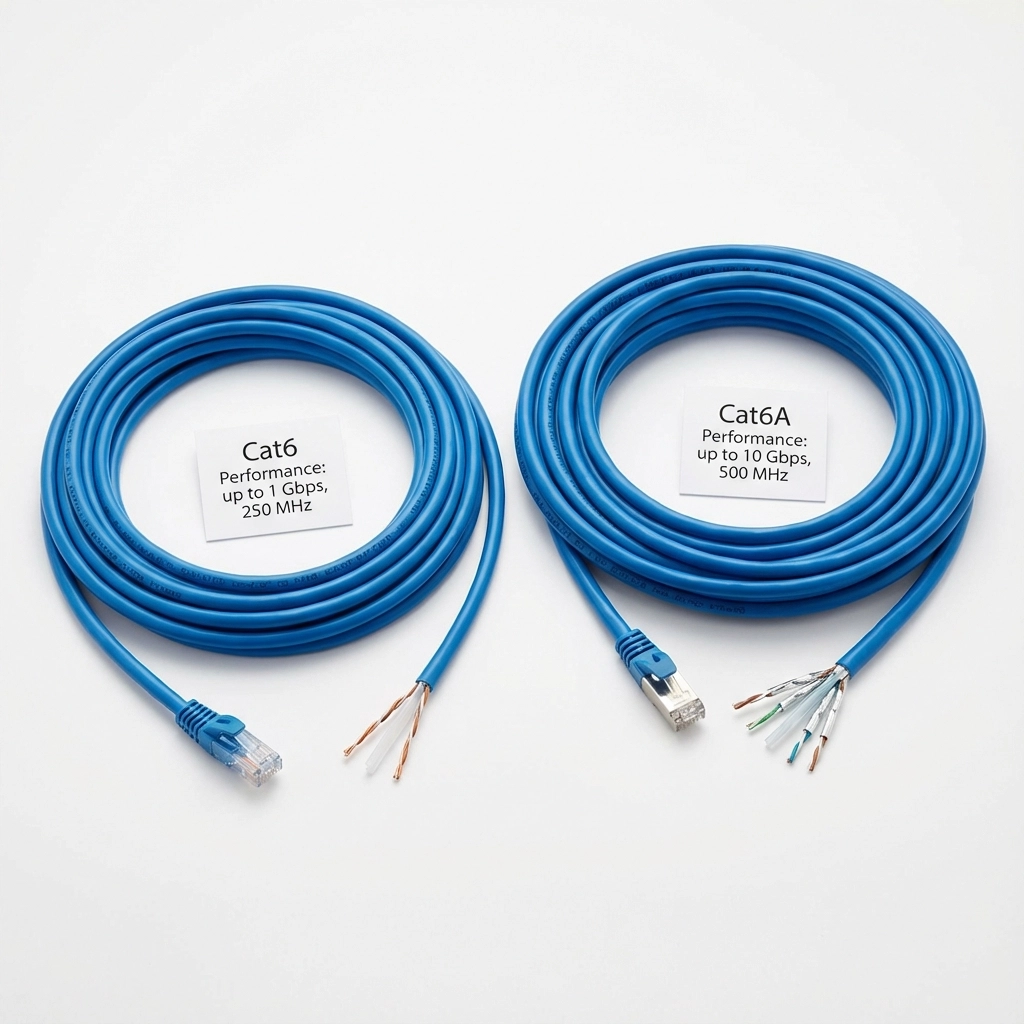 Alt tag: Side-by-side comparison showing Cat6 and Cat6A cables with performance specifications and recommended business applications clearly labeled
Fiber Optic: When Distance and Speed Matter Most
Fiber isn't necessary for every small business, but when you need it, nothing else comes close.
Ideal scenarios:
- Multi-building campuses where you need to connect separate structures
- Long-distance runs over 300 feet
- Server room connections linking main distribution frames to intermediate frames
- Businesses requiring ultra-fast, low-latency connections for specialized applications
Many successful small businesses use a hybrid approach: fiber for backbone connections between buildings or floors, and Cat6 for individual workstations. This gives you the best of both worlds without overspending.
Network Closets and Rack Design That Actually Work
Here's something most business owners don't realize: your cabling is only as good as how it's organized and terminated. A messy network closet isn't just an eyesore: it's a productivity killer waiting to happen.
Professional setup includes:
- Wall-mounted or floor racks properly sized for your equipment
- Patch panels instead of direct terminations (this matters more than you think)
- Clean cable management with proper routing and strain relief
- Clear labeling at both ends of every cable
- Adequate ventilation and power for all equipment
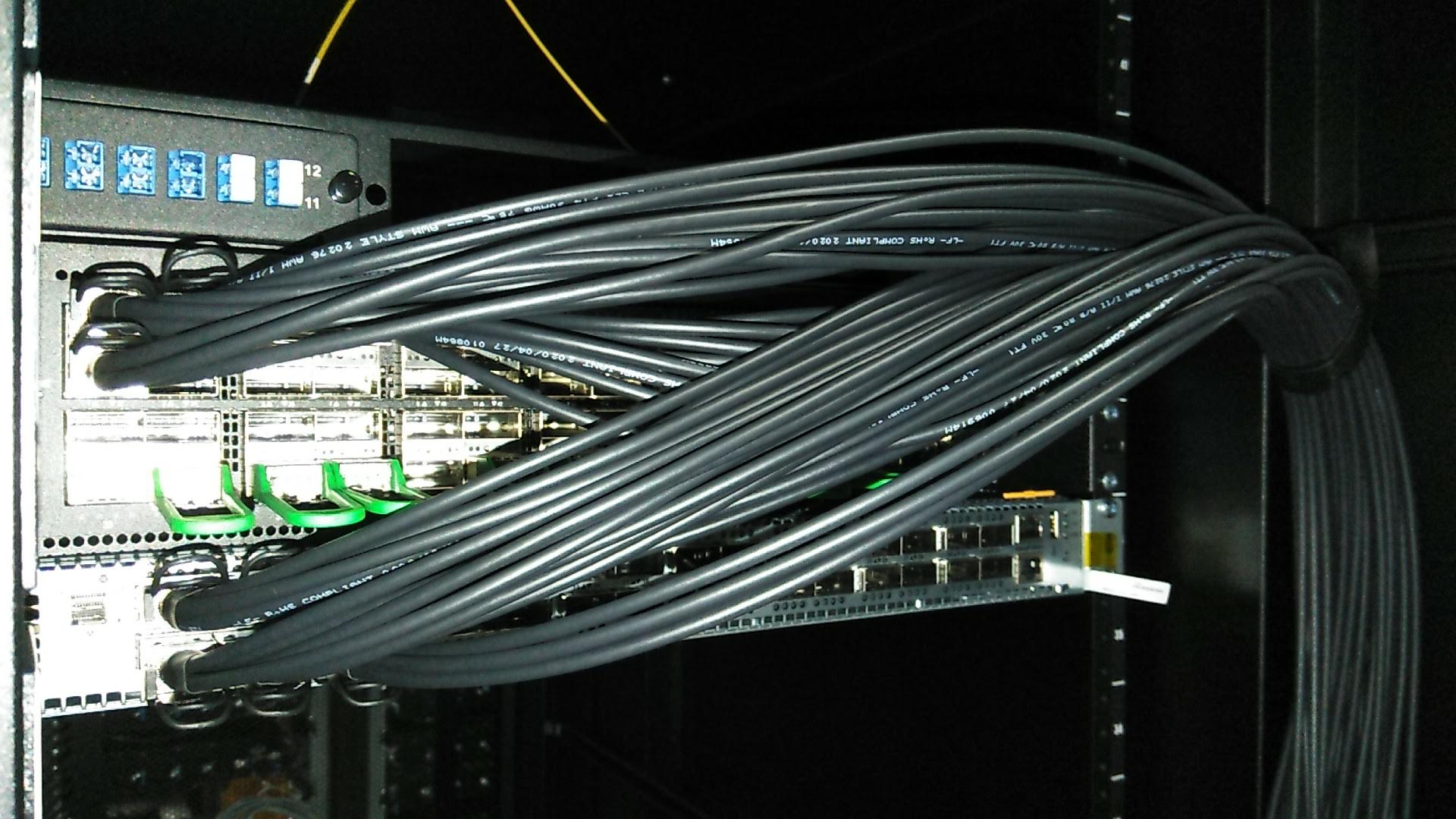 Alt tag: Professional structured cabling installation showing organized cable bundles properly routed to network switch with clean appearance and reliable connectivity setup
A clean rack isn't about looks: it's about performance. When something goes wrong (and it will), proper organization means fixing it in minutes instead of hours. That alone pays for the professional installation.
Testing, Documentation, and Why They're Non-Negotiable
One of the biggest mistakes small businesses make is skipping the testing and documentation phase. Don't do this.
Every professional installation should include:
- Cable testing and certification to verify performance standards
- Clear labeling with consistent numbering systems
- Basic network documentation showing what connects where
- Performance reports proving everything meets specifications
- Warranty coverage for materials and workmanship
This documentation saves thousands over time by eliminating guesswork. When you need to troubleshoot, add equipment, or expand, everything is clearly mapped out. No more tracing random cables through ceiling tiles.
Building Scalability From Day One
The best structured cabling solutions are designed with tomorrow in mind, not just today's needs.
Smart planning includes:
- Extra cable runs for future devices and equipment
- Spare capacity in racks and patch panels
- Flexible layouts that support new technology without major rewiring
- Room for growth in network closets and equipment spaces
- Pathway planning for future cable additions
Even if you don't need 20 network drops today, running them during initial construction costs a fraction of what you'll pay to add them later. Plan big, grow into it.
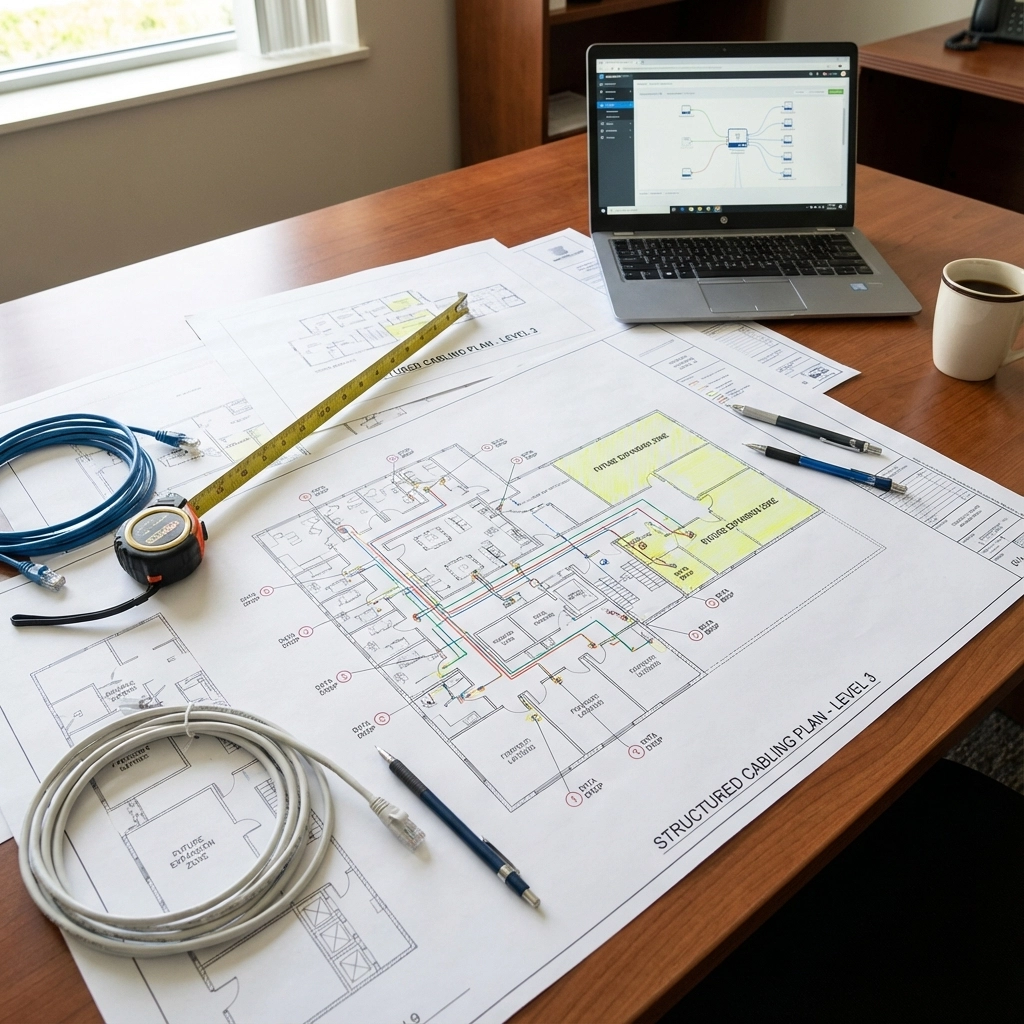 Alt tag: Network planning diagram showing scalable structured cabling design with current needs and future expansion capabilities clearly marked for small business growth
Common Mistakes That Cost Small Businesses Thousands
Every year, small businesses waste money on cabling shortcuts that seem like good ideas at the time. Here are the biggest ones to avoid:
- Running consumer-grade cables instead of commercial-grade certified products
- Daisy-chaining devices through switches instead of proper home runs
- Skipping labeling and documentation to save a few hours of labor
- Mixing old and new cable types randomly throughout the building
- Hiring general electricians instead of certified low-voltage specialists
These shortcuts almost always lead to performance issues, downtime, and much higher costs when you're forced to fix them properly later.
The Real Cost of Waiting vs. Investing Now
Let's talk numbers. A proper structured cabling installation for a small business typically runs $150-$300 per drop, depending on complexity and cable type. That might seem like a lot upfront, but consider the alternatives:
Costs of poor cabling:
- Lost productivity during outages: $5,000-$50,000 per incident
- Emergency service calls: $150-$300 per hour
- Equipment failures from power issues: $500-$5,000 per device
- Complete rewiring later: 3-5 times the original installation cost
Benefits of proper installation:
- 99%+ network uptime
- Faster troubleshooting and repairs
- Professional appearance for clients
- Equipment protection and longer lifespan
- Easy expansion and upgrades
The math is pretty clear: investing in quality structured cabling isn't an expense, it's insurance for your business operations.
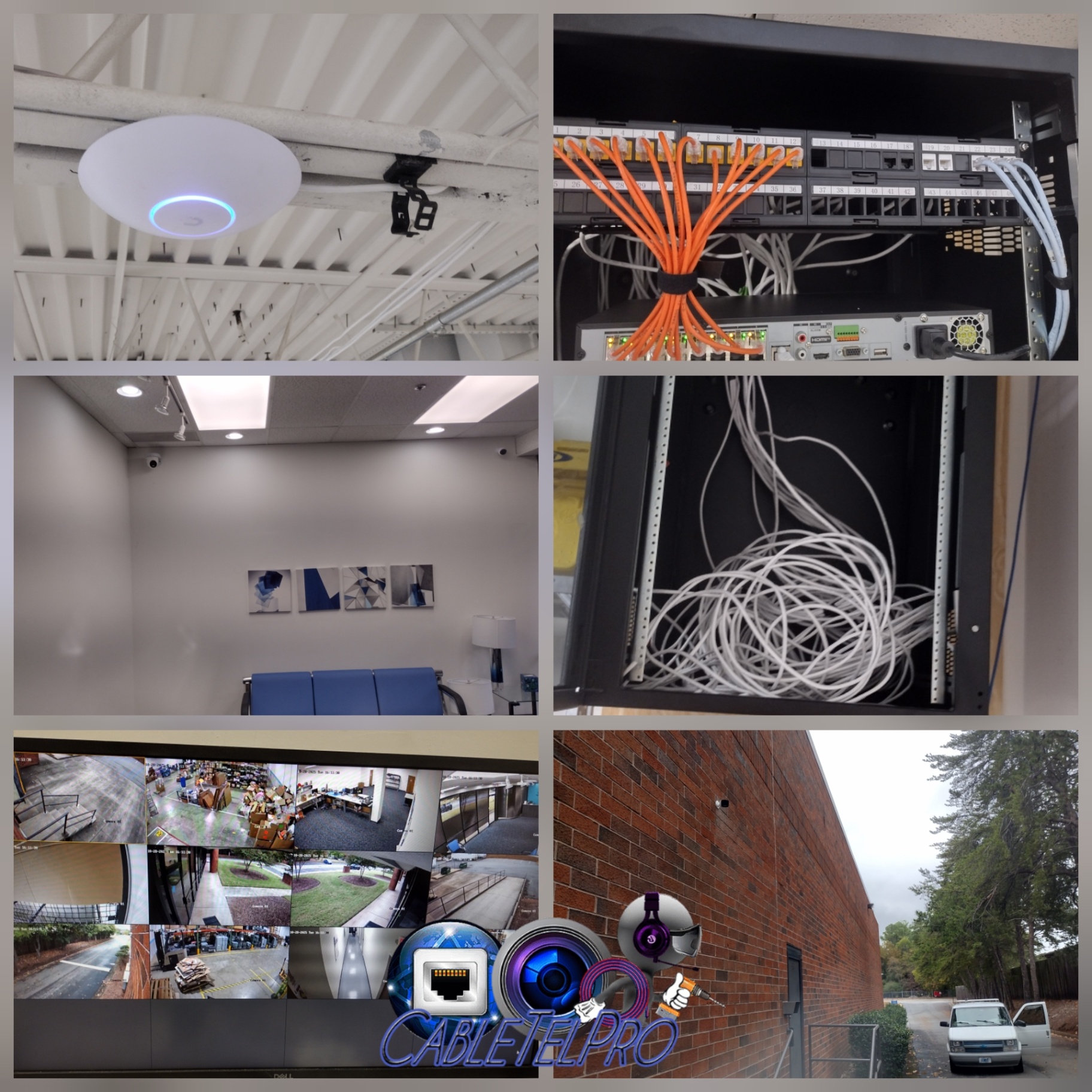 Alt tag: Professional installation showcase featuring security camera setup, structured cabling, network equipment, and monitoring systems all expertly installed and integrated
Making the Right Choice for Your Business
For small businesses across the US, the best structured cabling solution is one that's professional, organized, scalable, and designed around how you actually operate.
Whether you're opening a new location, upgrading an older office, or adding cameras, access points, or POS systems, your cabling should support your growth, not hold it back.
The key is working with experienced professionals who understand small business needs and budget constraints. Look for certified installers who provide clear quotes, proper testing, and complete documentation.
A well-designed structured cabling system delivers reliability, efficiency, and peace of mind. It's the foundation that lets you focus on running your business instead of fighting technology problems.
Ready to upgrade your business infrastructure the right way? A professional cabling assessment can show you exactly what your current setup can handle and what improvements will deliver the biggest impact. Contact CableTel Pro to schedule your consultation and discover how proper structured cabling can transform your business operations.